
Back pain is close to a rite of passage after 40. In 2019, 39 percent of US adults reported back pain in the previous three months, and the share rose to 44.3 percent among adults 45 to 64 and 45.6 percent at 65 and older, according to the CDC's National Center for Health Statistics.
The common response is to do less: skip the yard work, sit out the golf round, avoid anything that involves bending. That instinct makes sense. The research points somewhere else.
Here is what the evidence supports, where it's still thin, and what sensible training looks like.
What the guidelines recommend first
When the American College of Physicians reviewed the evidence on chronic low back pain, its guideline told clinicians and patients to start with nonpharmacologic treatment, and exercise was listed first among the options. Medication was reserved for people who don't respond well enough. The 2017 guideline appears in the Annals of Internal Medicine.
That's a real shift from the old advice to rest and wait it out.
It isn't a promise, though. Exercise is the best-supported first option, not a cure, and back pain has many causes. If your pain is new, severe, getting worse, or you're not sure what's behind it, talk with your doctor or physical therapist before you start, and keep them in the loop as you train.
Which kinds of exercise have the best support?
A 2020 network meta-analysis pooled 89 randomized trials of exercise for chronic low back pain. Published in the British Journal of Sports Medicine, it found Pilates, resistance training, stabilisation (motor control) training, and aerobic exercise to be the most effective approaches. For physical function, meaning everyday tasks like getting up, carrying, and bending, resistance and stabilisation training ranked highest.
The authors rated the quality of that evidence as low on the GRADE scale. So the fair reading is this: these are the best-supported options available, and the research is still maturing. No single exercise or program fixes a back.
The list isn't exotic. Strengthening work and controlled trunk training are the core of good strength coaching.
The movements that matter: hinging, bracing, and carrying
Most back-conscious strength training comes down to a handful of patterns, taught slowly and loaded gradually.
- The hip hinge. Learning to bend from the hips with a long spine, first with a dowel and later with a kettlebell deadlift, teaches the hips and hamstrings to share work the lower back often tries to do alone.
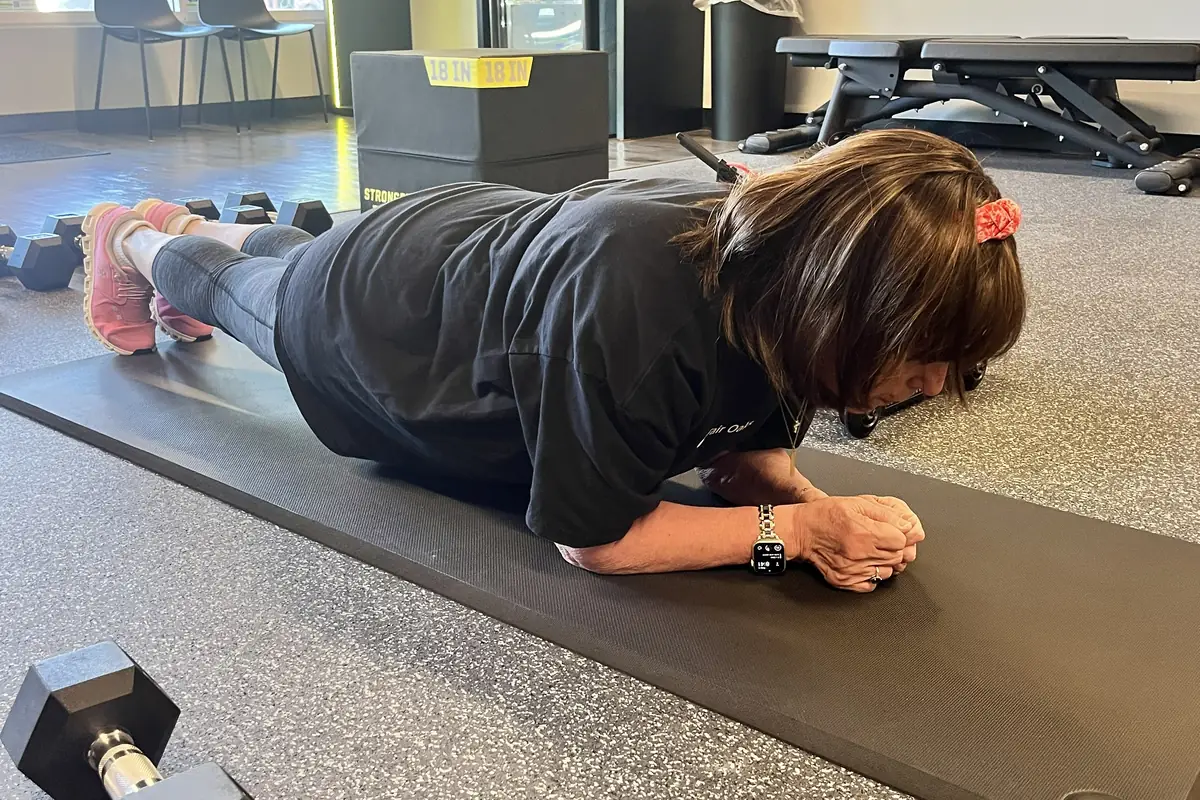
- Trunk control. Dead bugs, bird dogs, and side planks train the muscles around the spine to hold position while the arms and legs move.
- Carries. A farmer carry asks the whole trunk to stay steady under load while you walk, much like hauling heavy bags in from the car.
- Squats and step-ups. A goblet squat or box step-up builds the leg strength you use to rise from a low chair or climb a flight of stairs.
Long stretches of sitting are part of the picture for a lot of people here. A day at a desk, a slow drive home along Fairfax Boulevard, then an evening performance at George Mason's Center for the Arts adds up to many hours in a chair. Our post on strength training for desk workers covers simple ways to break up that pattern.
The goals people bring tend to be concrete, too: playing a round of golf at Army Navy Country Club's Fairfax campus, or walking the 4.7-mile loop around Burke Lake, just south of the city. Goals like those shape what a program emphasizes, from rotation and hip mobility to walking stamina.
How coaches adjust training around a sensitive back
Before anyone picks up a weight, a good coach wants to see how you move. At Alloy Fairfax City, that starts with a functional movement assessment that identifies mobility restrictions, muscle imbalances, and movement limitations before training begins.
From there, the adjustments are practical:
- Range first, load second. If a full-depth hinge bothers your back, the coach can shorten the range, for example a deadlift from raised blocks, and build back over the following weeks.
- Swap, don't skip. A movement that doesn't agree with you on a given day gets a substitute that trains a similar pattern, like a sled push or a supported row.
- Progress in small steps. Weight, reps, and range go up gradually, guided by how your back responds the next day.
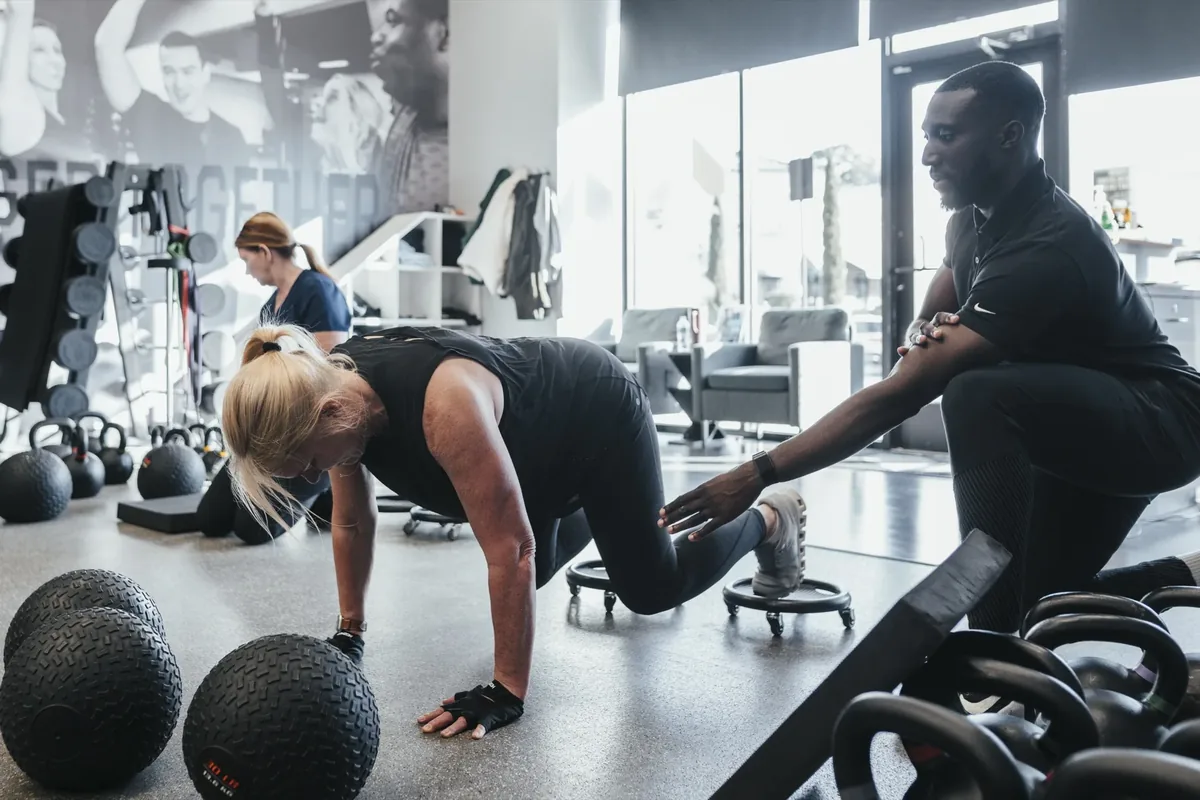
Sessions are capped at six members, so the coach can watch your hinge on every rep instead of scanning a crowded room. Programming is individualized to each member's fitness level, mobility, injuries, and goals. If a physical therapist has given you specific guidance or restrictions, bring it along so your coach can build around it.
What should your first step be?
If back pain has kept you away from strength training, start with a low-stakes visit where a coach can see how you move. The Complimentary Intro Session starts with a one-on-one conversation about your goals, health history, and training experience, and that includes your back. Then comes a functional movement assessment, an InBody body composition analysis, and an introductory workout scaled to you. No pressure, no obligation.
The studio is on Main St near Old Town Fairfax, and members come from across the City of Fairfax and nearby Fairfax Station, Burke, Vienna, Oakton, and Mantua.