
Northern Virginia may be the most professionally seated region in America. Between the federal workforce, the contractors, the tech corridor, and the commutes that connect them, a normal local adulthood can log eleven hours of sitting a day without trying: the drive, the desk, the meetings that could have been emails, the drive again, the couch earned by all of the above.
Your body keeps the books on all of it. The entry it makes is not just tight, the word everyone reaches for. It is weak in specific, predictable places, and that specificity is good news, because it makes the fix trainable. Here is what the sitting years actually do, and the strength work that undoes it.
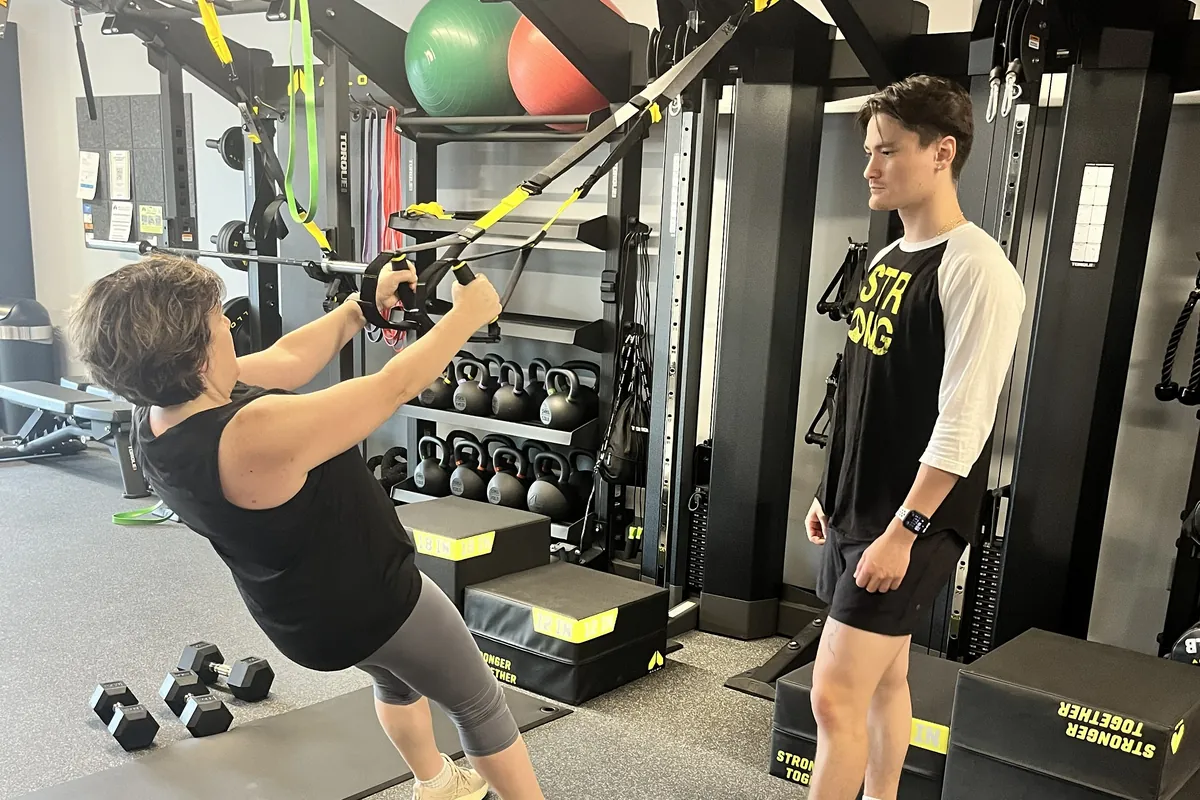
What does chronic sitting actually change?
Held long enough and often enough, the seated shape becomes a set of adaptations:
- Glutes go quiet. Hip extension, the push that powers walking, stairs, and standing tall, is the movement sitting most completely eliminates. The muscles adapt to unemployment.
- The upper back loses its endurance. Holding shoulders back against gravity all day is muscular work, and screen posture lets those muscles resign. The rounded silhouette follows.
- Hips and hamstrings adapt short. Less about permanent shortening than about strength disappearing from the ranges you never visit.
- The trunk forgets how to brace. A supported chair does your core's job for it, hour after hour, year after year.
None of this is damage. It is adaptation to the demands you gave it, which means different demands rebuild it, at any career stage.
Why is strength training the fix, rather than stretching?
Because the deficit is strength, not just length. Stretching visits the missing ranges; strength training moves in with furniture. A loaded hip hinge rebuilds the glutes and hamstrings through the exact extension sitting deletes. Rows rebuild the upper-back endurance that holds your posture through hour nine. Squats restore the sit-to-stand pattern with interest. Carries teach the trunk to brace the way no chair-supported hour ever will. Stretching feels productive for twenty minutes; strength lasts through the workday.
What does the program look like on a real schedule?
This is the objection we hear most from desk-career members: there is no time. The honest math says otherwise. The full fix is two to three coached hours a week, booked like the meetings that run your life anyway. Sessions at our Fairfax City studio are appointments with your name on them, capped at six members, programmed individually, and done in under an hour. The format was practically designed for calendar-driven people: show up, the plan is already made, a coach watches your form while your brain clocks out of the workday, and the session ends on time. Members who commute past us on their way home describe it as the best meeting of their week, attendance mandatory in the good way.
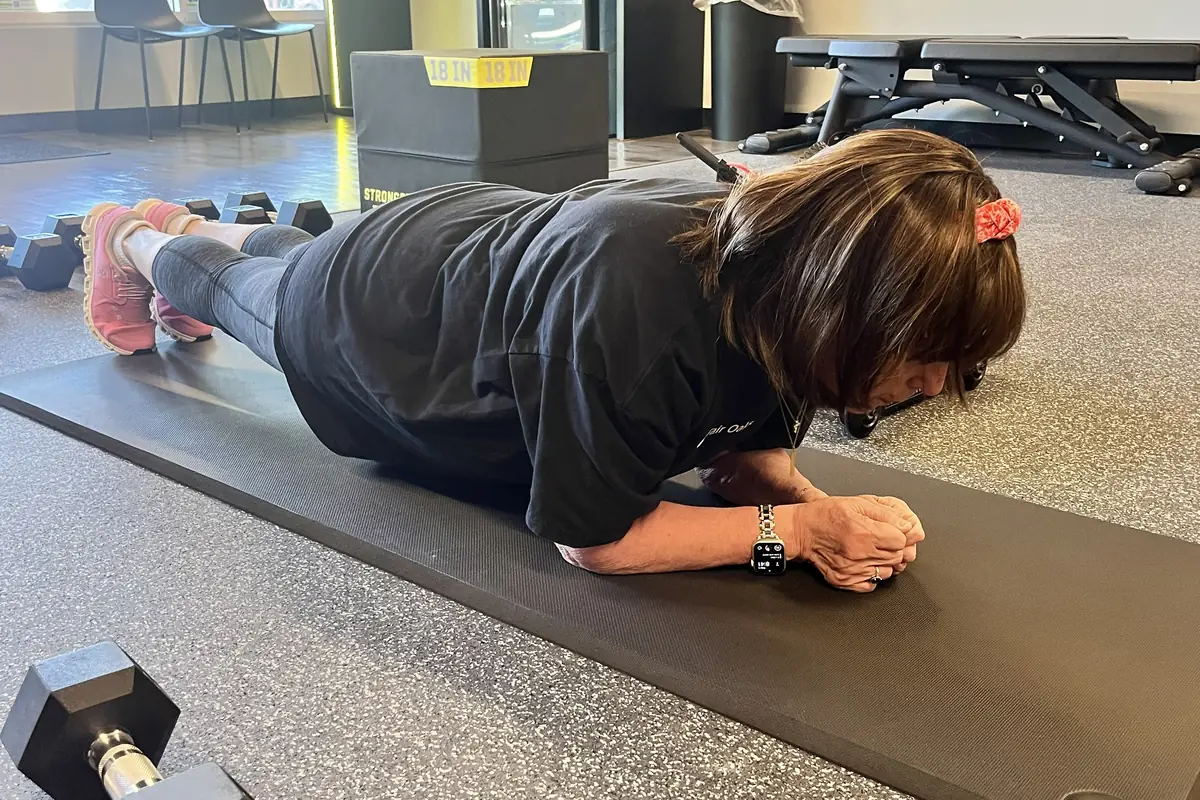
What changes, and how fast?
The early returns are the felt ones, usually inside a month: standing feels less like a chore, the end-of-day back ache arrives later or not at all, stairs stop being cardio. Then the visible ones across two to three months: posture that no longer needs reminding, strength numbers climbing, composition shifting on the monthly InBody scan. And then the quiet career-length one: a body that stops accumulating the sitting tax, because two or three hours a week are steadily paying it down. If it has been years since you trained, our guide to starting again after years off covers the on-ramp; the desk-specific version simply starts where your chair left you.
Where do you start?
With the assessment your chair has been writing material for. The Complimentary Intro Session at our Fairfax City studio includes a functional movement assessment, where the desk patterns show up honestly, an InBody body composition scan, your history and goals, and a coached introductory workout. Programs are individualized from there, in sessions small enough that your coach knows exactly which hours your body has been keeping.
If you live or work around Fairfax City, Mantua, Burke, Fairfax Station, or Vienna, book your Complimentary Intro Session. Bring the body your career built. We will help you renovate.