
Men tend to arrive at this conversation late, and through the side door. Not because the changes are not happening, but because the culture around male fitness offers two unhelpful scripts: pretend nothing changed and train like you are 28 until something tears, or accept the dad-bod glide path with a self-deprecating joke. Neither script serves anyone.
Here is the third option: an honest account of what actually shifts for men through the 50s, and a training response built for it. It is a good-news story, mostly, though it only becomes one on purpose.
What actually changes for men after 50?
- Muscle leaves faster if unattended. The gradual drift that starts in the 30s picks up pace, and with it goes some of the easy strength men take for granted until a suitcase or a transmission-less jack teaches otherwise.
- Recovery gets honest. The back-to-back hard days that worked at 30 stop working. This is not weakness; it is changed accounting, and programs that respect it keep progressing while the pretend-nothing-changed crowd cycles through injuries.
- Hormones shift gradually. Testosterone declines slowly with age for most men, which affects muscle, energy, and drive at the margins. Worth knowing, occasionally worth a physician conversation, and never the excuse the supplement industry sells it as: training response remains robust through every decade we coach.
- Old injuries begin charging interest. The knee from rec league, the shoulder from that one move in 2009: they become stakeholders in your programming, and ignoring stakeholders goes about as well in training as anywhere else.
What is the good news?
Nearly all of it, given action. Men over 50 respond strongly to progressive resistance training: strength climbs within weeks, muscle rebuilds across months, and the InBody scans of our male members in their 50s and 60s regularly show composition trends their 40s never produced, mostly because their 40s never trained deliberately. The capacity did not leave. The defaults changed. Deliberate beats default, and it is not close, which is the entire argument we made in building muscle after 50.
What should training look like now?
Different architecture, same ambition:
- Two to three coached sessions weekly, full body, built on the compound patterns: squat, hinge, press, pull, carry. Frequency stays; junk volume goes.
- Progression in planned, smaller steps. The ego lift is the most expensive lift in the over-50 gym. Steady beats spectacular, and it also, inconveniently for egos, produces better numbers within a year.
- Recovery treated as programming. Sessions spaced, sleep respected, hard days earned. This is where the still-training-like-28 men lose to the training-like-55 men, on both durability and results.
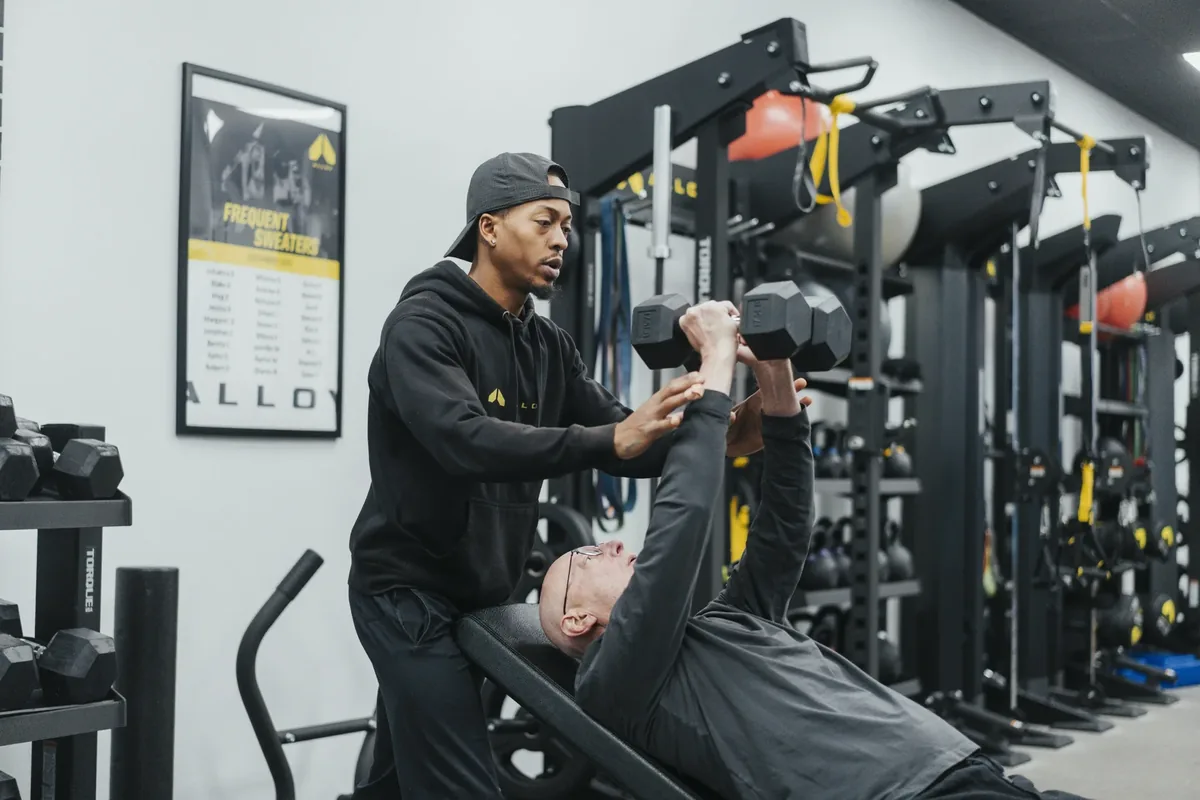
- Old injuries programmed around, openly. A coach who knows your history modifies in real time, which is standard practice in our six-member sessions, and the difference between a shoulder that participates and one that vetoes.
- Protein and habits doing their quiet work, with ongoing guidance instead of a bro-science feed.
What about the numbers men like to chase?
Keep chasing numbers; just chase the right ones. Working-weight benchmarks that climb month over month. Muscle mass on the monthly InBody scan. Body fat trending down without crash tactics. Resting comfortably in the strength that makes the truck bed, the attic, the golf swing, and the grandkid airborne-launch all routine. Those numbers compound for decades, and unlike the maxes of your 20s, they pay out in the life you are actually living.
The side door is open
If you have been meaning to get back to it for a few years now, this is the low-drama way in: a Complimentary Intro Session at our Fairfax City studio, with your history and goals, an InBody baseline, a movement assessment that takes the old injuries seriously, and a coached introductory workout. Sessions cap at six members, programming is individual, and most of the room is over 40, plenty of it male, none of it interested in judging your starting point.
Fairfax City, Mantua, Burke, Fairfax Station, Vienna: book your Complimentary Intro Session. Deliberate beats default. Start deliberately.