
No. It is not too late. Research consistently shows that adults in their 50s, 60s, 70s, and even 90s build muscle and gain strength when they begin resistance training. In studies of previously untrained older adults, strength gains of 25 to 100 percent within a few months are common.
The idea that muscle building has an age cutoff is one of the most damaging myths in fitness, because it convinces the exact people who benefit most to never start. Here is what the science actually says, and what it looks like in practice at our studio in Fairfax City.
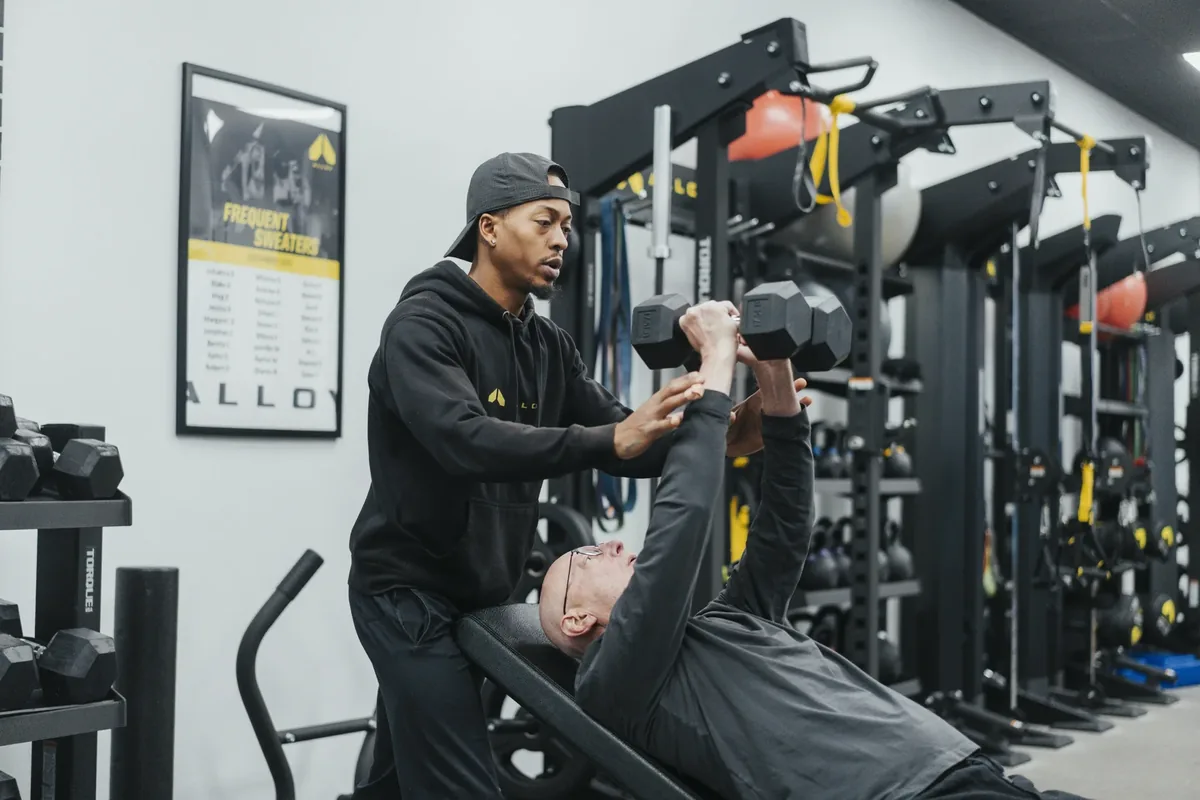
What happens to muscle as we age?
Adults lose roughly 3 to 8 percent of their muscle mass per decade after age 30, a process called sarcopenia, and the rate accelerates after 60. Left alone, that slow leak eventually becomes the difference between independence and frailty.
The critical word is "left alone." Sarcopenia is not a fixed sentence. It is largely a use-it-or-lose-it phenomenon, and resistance training is the most effective known way to slow, stop, and partially reverse it.
Can you actually build new muscle after 50?
Yes. A landmark line of research going back to studies at Tufts University found that even nursing home residents in their 80s and 90s increased their strength dramatically with supervised resistance training, some more than doubling it. Younger 50- and 60-something bodies respond even better.
Two things change with age: recovery takes somewhat longer, and progress requires more consistency. What does not change is the fundamental mechanism. Muscle challenged by progressive resistance adapts by getting stronger, at every age.
How long does it take to see results after 50?
Most beginners over 50 notice strength improvements within four to six weeks and visible changes within two to three months of consistent training. Early strength gains come from your nervous system learning to use the muscle you have; new muscle tissue follows.
A realistic timeline from our coaching experience in Fairfax City:
- Weeks 1 to 4: Movements feel smoother, weights go up steadily, stairs and chores feel easier.
- Weeks 5 to 12: Measurable strength gains, better posture, clothes fitting differently.
- Months 3 to 12: Meaningful muscle and body composition change, and training feels like part of your identity rather than an experiment.
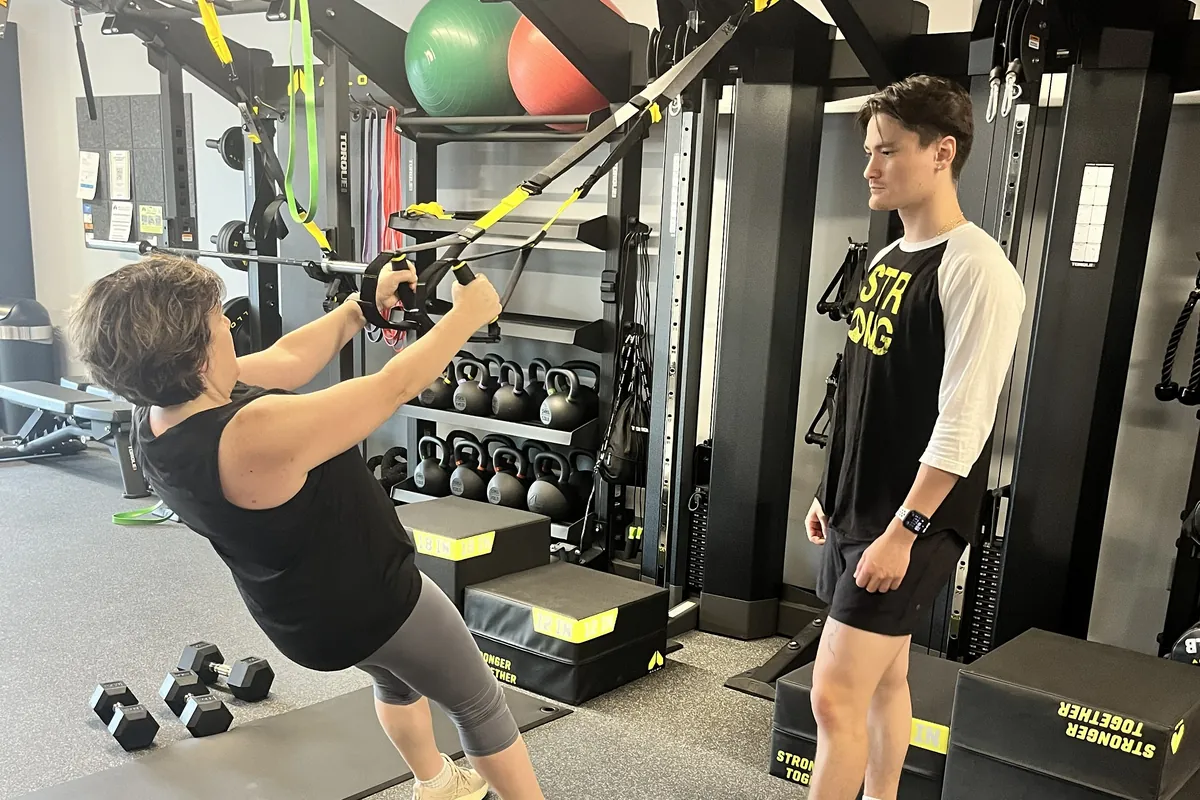
What kind of training builds muscle at this age?
Progressive resistance training two to three times per week, using challenging but manageable weights, is what the evidence supports. The CDC recommends all adults strength train at least twice weekly. Walking and swimming are excellent for your heart, but they do not provide the load that muscle and bone need.
Three principles matter more after 50:
- Form first. Joints with fifty years of history deserve correct technique before heavy loading.
- Progression is planned, not improvised. Adding weight too fast is how people get hurt; never adding it is how people stall.
- Recovery is part of the program. Rest days are when the muscle actually builds.
This is why coached environments outperform going it alone for older beginners. Supervision handles the three things above automatically.
The best time to start was 20 years ago. The second best time is now.
Every month of training you do in your 50s and 60s is strength banked for your 70s and 80s. Book a Complimentary Intro Session at Alloy Personal Training in Fairfax City, and find out what your starting point actually is.