
It is one of the quieter milestones of midlife: the morning your body starts booting up in stages. The first steps to the bathroom feel like a software update. Hands take a few minutes to accept the day. Somewhere between the coffee and the shower, everything loosens and you forget about it, until tomorrow morning runs the same program.
Morning stiffness after 40 is extremely common, usually benign, and, this is the part that deserves to be better known, meaningfully improvable with training. Here is what is actually happening at dawn, the red flags that belong to a doctor, and what the gym genuinely fixes.
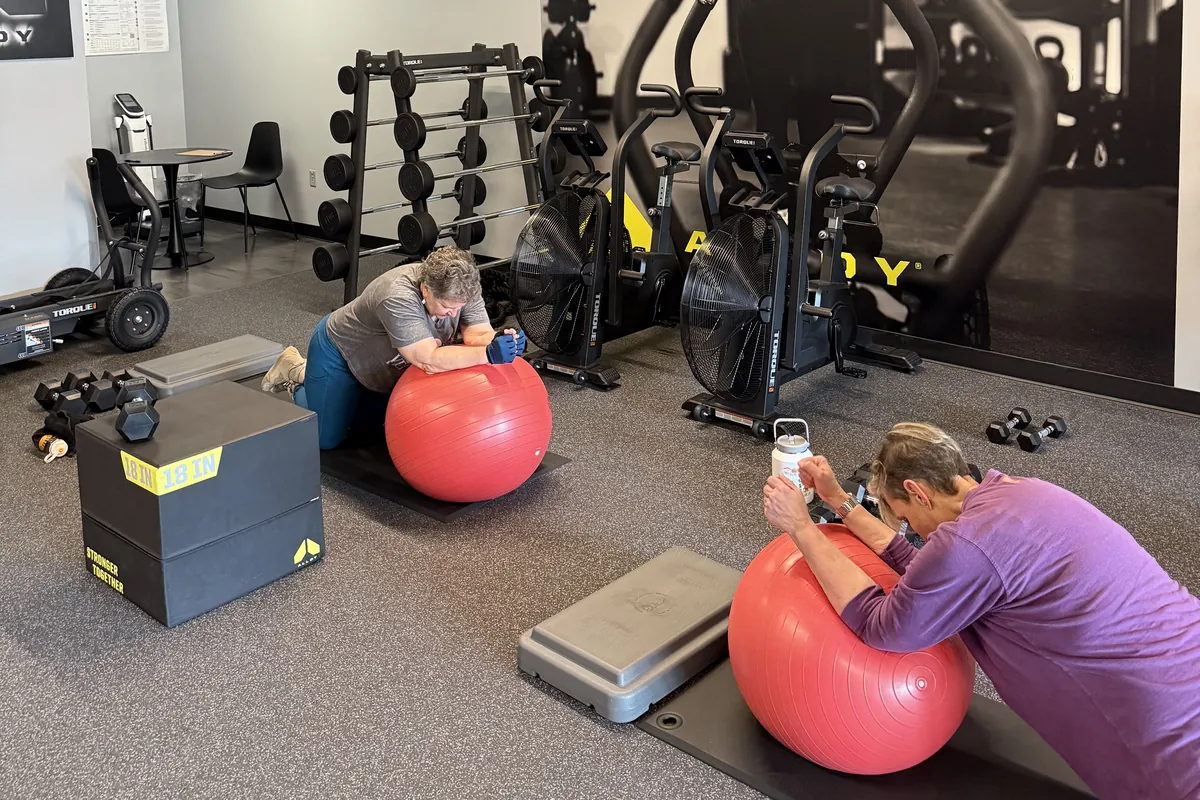
Why are joints stiff in the morning?
Mostly because of what stillness does overnight. Joints are lubricated by synovial fluid, which circulates with movement; eight motionless hours lets everything settle, like oil in a cold engine. Muscles and connective tissue lose warmth and pliability overnight too, and midlife tissue, which has usually lost some strength and elasticity to the quiet drift of the untrained years, feels the effect more. Add the accumulated opinions of old injuries and a desk career, and dawn becomes the least flattering hour of your musculoskeletal day.
The pattern that fits this ordinary version: stiff on waking, better within thirty-ish minutes of moving around, fine for the rest of the day. That improves-with-movement signature is the reassuring one.
When is morning stiffness a doctor conversation?
Worth saying plainly, because some stiffness is a message rather than a mood: stiffness that lasts an hour or more most mornings, joints that are swollen, warm, or red, symmetrical patterns in the small joints of both hands or feet, stiffness with fatigue or fever or unexplained weight change, or pain that wakes you at night. Any of those, get a physician's eyes on it, promptly and without self-diagnosing on the internet first. Inflammatory conditions caught early are managed far better than ones toughed out for two years. And if you do carry a diagnosis, training remains very much on the table, as we covered around achy knees and joint history, guided by your care team.
How does strength training reduce ordinary stiffness?
Several ways at once, which is why trained members keep reporting friendlier mornings:
- Motion is lotion, made regular. Training moves every major joint through real ranges under control, several times a week, which is exactly the circulation stiff joints are asking for.
- Strong muscles unload joints. Better-supported joints simply have easier days and easier dawns; the muscle around a joint is its suspension system.
- Tissue that gets loaded stays springier. Tendons and muscles adapt to progressive work by becoming more resilient, the opposite of the brittle feeling stiffness announces.
- Full ranges, restored and kept. Squats, hinges, presses, and carries through complete ranges maintain the very mobility that mornings borrow against.
The pattern members describe is consistent: within a few weeks of regular training, the morning boot-up sequence gets shorter, and within a few months it stops being a daily topic.
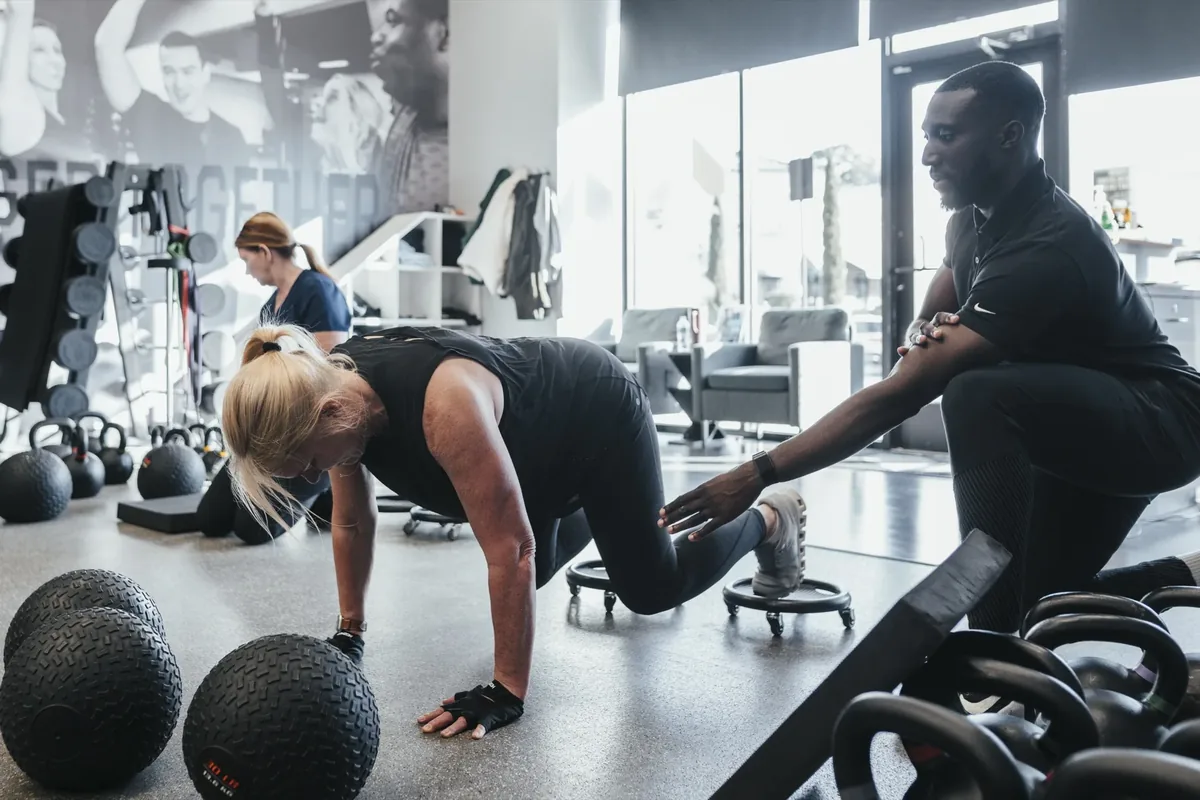
What helps around the training?
The unglamorous supporting cast: a couple of minutes of easy movement on waking rather than a heroic stretching routine, staying generally active through the day so the fluid keeps circulating, hydration, sleep in a position your neck does not resent, and warm showers doing what warm showers do. None of it replaces the strength work; all of it makes mornings marginally kinder while the training does the durable part.
Mornings are trainable
Our members did not join to fix their 6 a.m. shuffle; it is one of the first improvements they mention anyway. Coached sessions at our Fairfax City studio, capped at six members, take every joint through progressive, individualized work, warm-up included, old injuries respected. It starts with a Complimentary Intro Session: your history, including every joint with opinions, an InBody scan, a movement assessment, and a coached workout. Fairfax City, Mantua, Burke, Fairfax Station, Vienna: book your Complimentary Intro Session, and let your mornings file a better report by winter.