
When most adults over 40 decide to hire a coach, they picture the same thing: one trainer, one client, a full session of undivided attention. That picture is accurate, and for some people it is exactly the right choice.
It is not the only way to get coached, though. Small group personal training puts a handful of people with one coach, each working their own program. The useful question is which format gives you the supervision your body needs right now, and which one you will keep showing up to.
Here is an honest look at both, including the situations where we would tell you to go private.
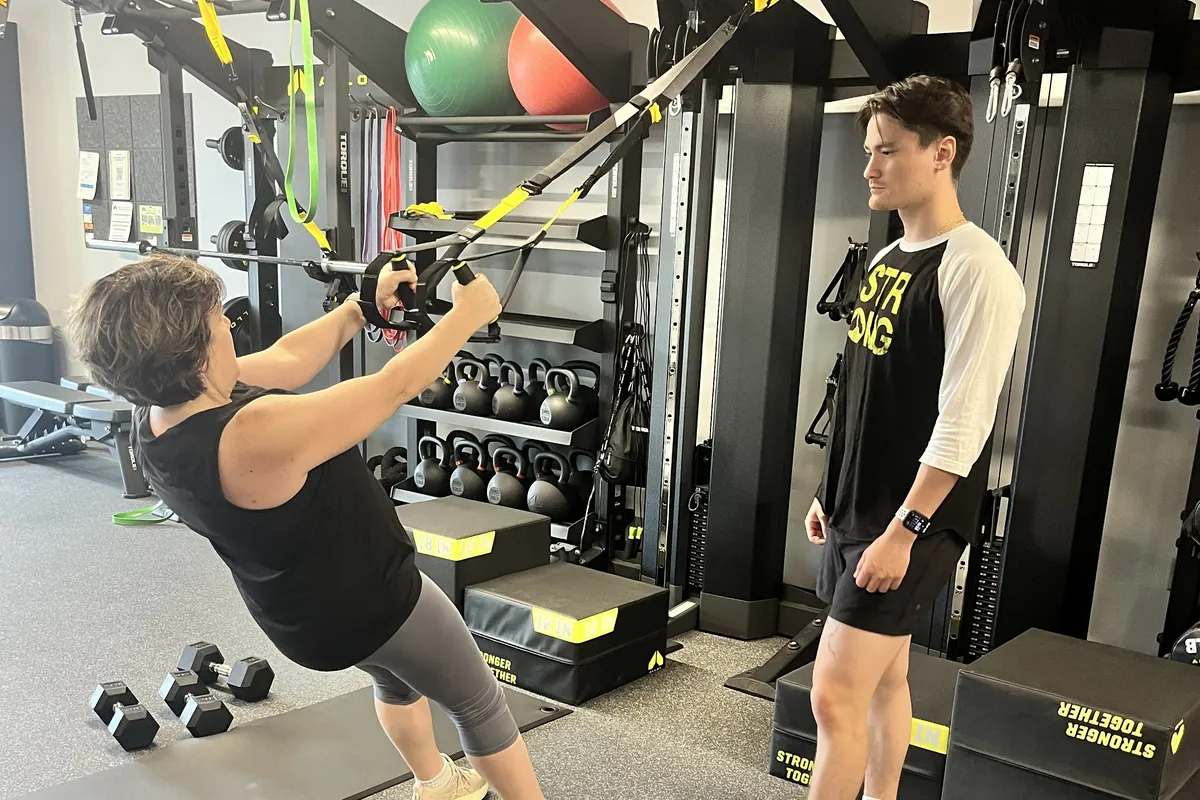
What private 1-on-1 training does well
Private training gives you every minute of a coach's attention. Every rep gets watched, every set gets adjusted, and the session bends around how you feel that day. Nobody else's program competes for the coach's eyes.
That matters most in a few specific situations:
- You recently finished physical therapy and want a careful bridge back to loaded training, with someone watching every movement.
- You have a complicated injury or health history that your clinician wants monitored closely.
- You are preparing for something very specific, like adding rotational power for golf at the Army Navy Country Club's Fairfax campus, and want every minute aimed at that goal.
- You feel so self-conscious about exercising around others that a group, even a small one, would keep you from starting.
If one of those describes you, private sessions are a reasonable call, at least for a while. There is no shame in starting there.
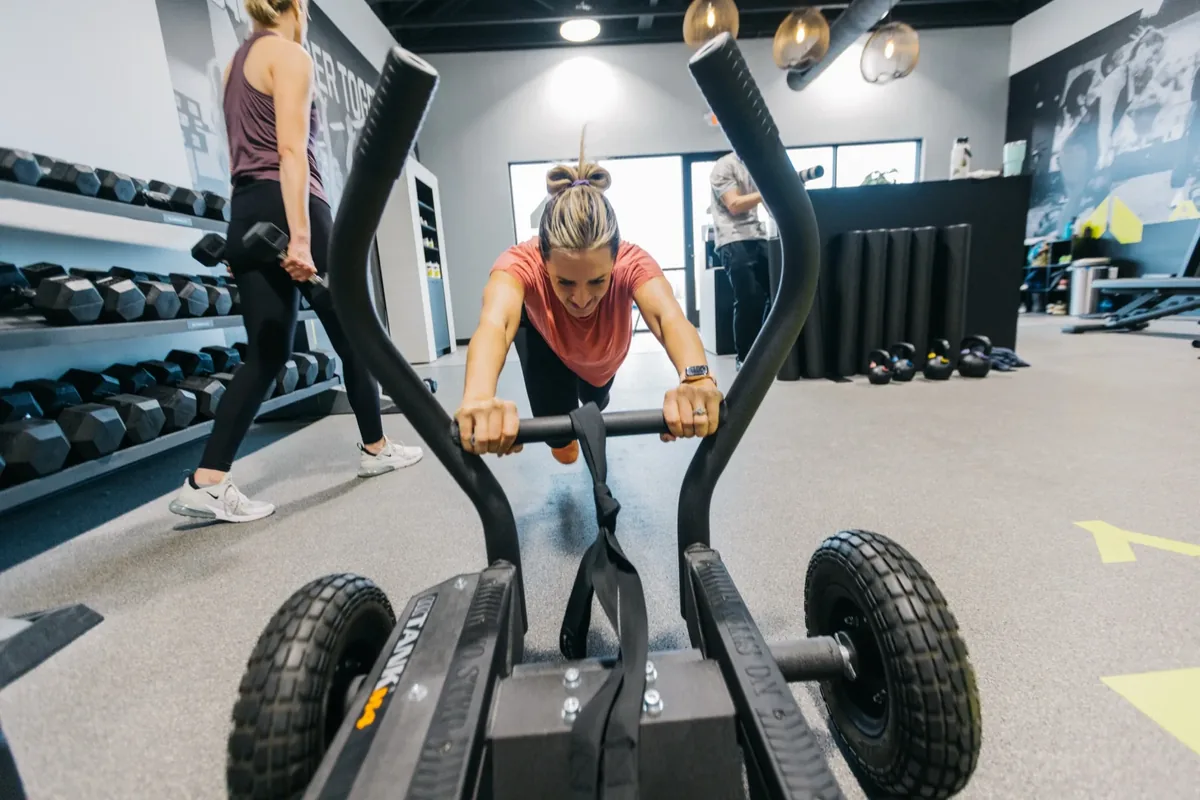
What small group personal training keeps, and what it changes
Small group personal training is not a fitness class. In a class, everyone does the same workout at the same time. In small group personal training, the coach runs individual programs side by side. At Alloy Fairfax City, small group sessions are capped at six members and individualized to each person's fitness level, mobility, injuries, and goals.
In practice, that might mean one member is doing goblet squats to a box, another is pulling a trap-bar deadlift, and a third is pushing a sled, all in the same hour. If you want the full breakdown of how that differs from a class, we covered it in small group training vs. fitness classes.
What changes is that the coach's attention is shared. You will finish some sets while your coach cues someone else. For most people that is fine; for the situations above, it may not be enough yet.
What the research says about groups and sticking with it
The honest answer first: we could not find a strong head-to-head trial comparing small group personal training against private personal training. Anyone who tells you one format clearly produces better results is going past the evidence.
What research does show is that the people around you affect how long you keep going. In the GOAL trial, 627 older adults in Vancouver were assigned to exercise groups, and those placed with people of a similar age adhered better over 12 and 24 weeks than those in mixed-age groups.
A broader 2017 review in PeerJ found that group-based and individual exercise programs produced similar health outcomes, with group formats tending to hold participation better over the long term. That review looked at exercise programs in general, not personal training specifically, so treat it as a clue rather than a verdict.
Put together, the picture is fairly simple. Results come from good supervision, a program built for you, and showing up for months. Small groups add peer accountability to that list. Private training adds more focused attention.
Why supervision matters more than the format
Both formats share the thing that matters most: a coach who watches you lift and adjusts the plan. The bigger gap is between coached training and going it alone.
The LIFTMOR trial is a good example. Postmenopausal women with low bone mass did eight months of twice-weekly, 30-minute high-intensity resistance and impact training. Their lumbar spine bone density improved about 2.9 percent, while the low-intensity group lost about 1.2 percent. The key word in that study is supervised.
So the bigger decision is usually coached versus uncoached, which we unpacked in personal trainer or gym membership.
How to decide which fits you
Start with a few honest questions:
- Do I need someone watching every single rep right now, or mainly a coach who knows my program and catches mistakes?
- Am I more likely to show up when other people expect me?
- How many sessions a week can I realistically keep up through a busy season?
That last question matters. A small group format usually means more coaching hours for a member's budget, and a schedule you can sustain matters more than an ideal plan you abandon by January.
Think about the goal, too. Walking the full 4.7-mile loop at Burke Lake Park comfortably, or staying on your feet all day at next year's Fall Festival in Old Town, takes steady work over months.
What should your first step be?
The easiest way to decide is to try being coached and see how it feels. At Alloy Fairfax City, the Complimentary Intro Session starts with a one-on-one conversation with a coach about your goals, health history, and training experience. From there you get a functional movement assessment, an InBody body composition analysis, and an introductory workout scaled to you. No pressure, no obligation.
That visit gives you real information to make this call, including your coach's honest take on readiness for a small group or the need for extra care first.
Members come from the City of Fairfax and nearby Fairfax Station, Burke, Vienna, Oakton, and Mantua, and the studio sits on Main St near Old Town Fairfax. Book Your Complimentary Intro Session.