
Hiring a personal trainer is one of the few health decisions most people make with almost no information. You read a short bio, glance at the letters after a name, and hope for the best.
That's a lot of trust to hand over, especially after 40. A cranky shoulder, an old knee surgery, or a stiff lower back changes what good coaching looks like. A few clear questions will separate the trainers worth your time from the ones who'll simply make you tired.
Here's how a coach would vet another coach.
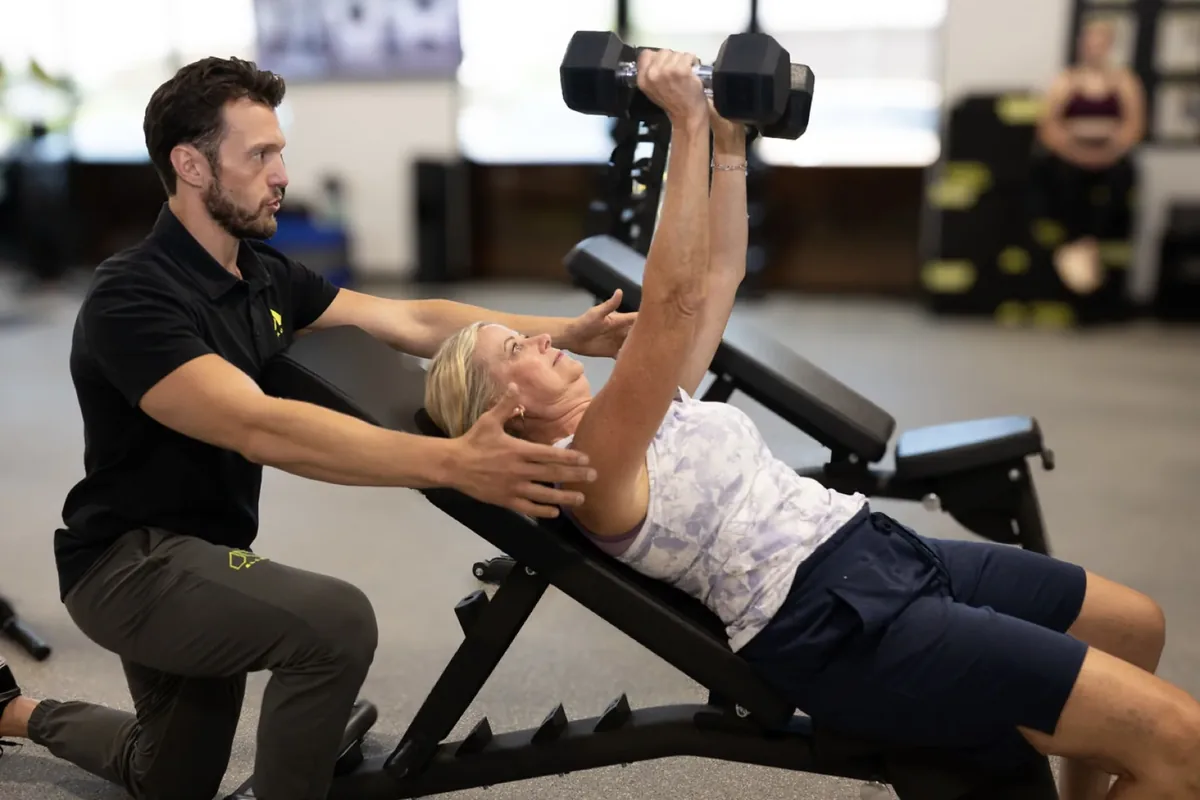
Start with credentials, but don't stop there
Personal trainers generally need a certification before they work with clients, and most also need CPR and AED certification, according to the US Bureau of Labor Statistics. That's the floor. The real question is which certification.
Look for one accredited by the National Commission for Certifying Agencies (NCCA). It's the main third-party quality mark for trainer certifications, and ACSM, NSCA, NASM, and ACE certifications all carry it, per the O*NET certification listing. Gyms and hospitals that hire trainers typically require an NCCA-accredited credential, so it's a fair bar for you to use too.
Some credentials ask for more. The NSCA's Certified Strength and Conditioning Specialist (CSCS) requires at least a bachelor's degree plus current CPR/AED just to sit the exam, according to the NSCA. If you see CSCS after a name, that person has studied the science behind training at a college level.
The field is also big. The BLS counted about 388,400 fitness trainer and instructor jobs in 2025 and projects 7 percent growth through 2035. That means a wide spread in experience, and a certificate only proves someone passed a test. It doesn't tell you what they do when your knee complains halfway through a set of lunges.
Questions to ask before you hire anyone
A good trainer welcomes questions. These five tell you most of what you need to know:
- "Who do you usually train?" You want someone who works with adults your age regularly, not someone whose usual client is a 25-year-old prepping for a race.
- "What happens before the first workout?" Listen for an assessment of how you move, plus questions about your health history and past injuries.
- "What do you do when something hurts?" The right answer involves modifying the exercise and, when needed, looping in your doctor or physical therapist. "Push through it" is the wrong answer.
- "How will we know it's working?" Look for baseline measurements and re-tests, not just "you'll feel it."
- "How many people will you coach at once?" Group size decides how much attention your form actually gets.
Why the assessment should come first
A program is only as good as the information it's built on. If your goal is to walk the 4.7-mile loop at Burke Lake Park without your hips grumbling for two days, or to get through a round of golf at Army Navy Country Club's Fairfax campus and still feel strong on the back nine, the plan should start from how you actually move.
That's the job of a functional movement assessment. It identifies mobility restrictions, muscle imbalances, and movement limitations before training begins. Maybe your ankles don't bend enough for a deep squat yet, or one hip does more work than the other on a step-up. Those details change exercise choices on day one.
At Alloy Fairfax City, where Daniel Getchell is Director of Training, the assessment happens before training begins for exactly that reason. A trainer who skips this step is guessing, and guessing with your joints is a poor trade.
Red flags worth walking away from
Most trainers mean well. Still, a few patterns should make you pause:
- Everyone in the room is doing the same workout at the same weight, regardless of age or injury history.
- Joint pain gets treated as a sign of effort rather than a reason to adjust.
- Nobody asks about your health history, medications, or past surgeries.
- You feel pressure to commit before you've trained even once.
- Progress is described in vague terms, with nothing measured at the start or along the way.
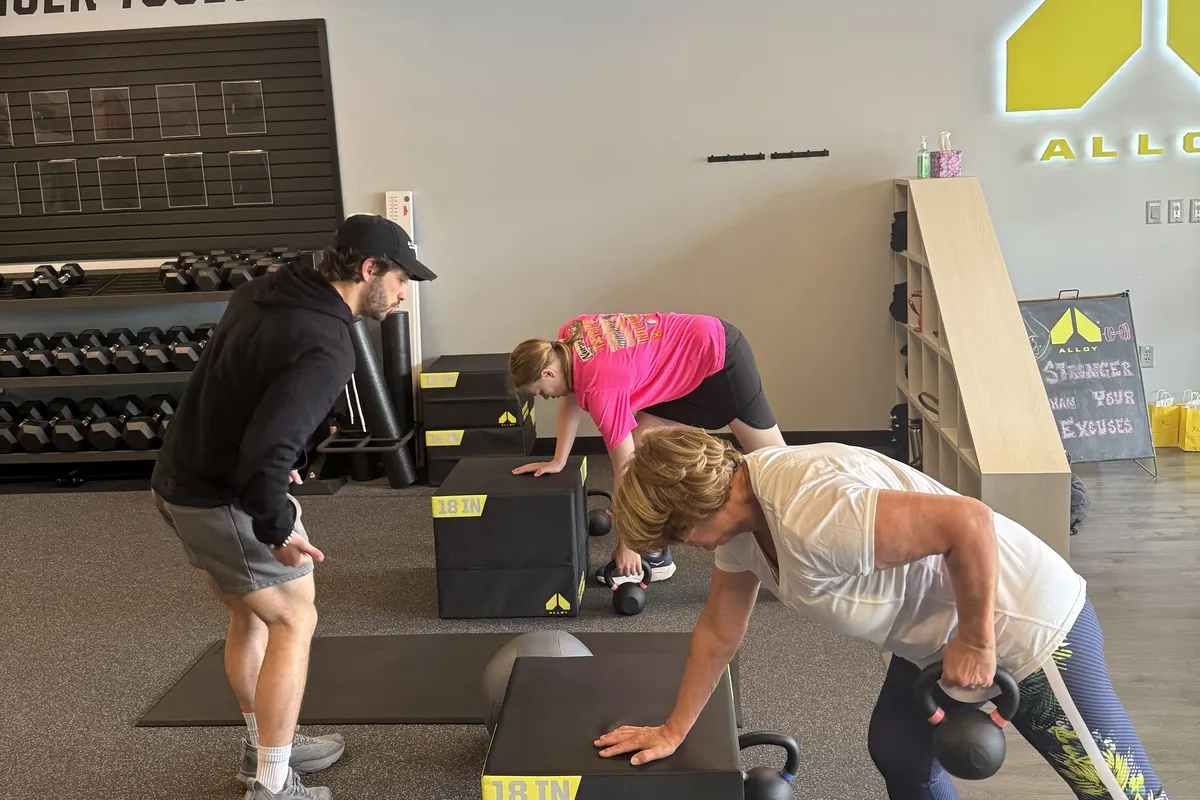
Watch them coach, not just talk
The best test of a trainer is a real session. Watch what they do while you're moving. Do they cue your form specifically ("push the floor away," "ribs down") or just count reps? Do they swap a movement when something doesn't feel right, say trading a barbell lunge for a supported split squat?
Notice how attention gets shared. In one-on-one training, it's all yours. In small group personal training, sessions are capped at six members so a professional coach can keep eyes on everyone while each person follows a program built for their own fitness level, mobility, injuries, and goals. Know which one you're signing up for.
Finally, think about the life you're training for: an evening at George Mason's Center for the Arts, or a stroll around Old Town Square without your back stiffening up. A good coach asks about those goals and builds toward them.
What should your first step be?
The quickest way to judge a trainer is to train with them once. Our Complimentary Intro Session starts with a one-on-one conversation with a coach about your goals, health history, and training experience. From there you'll do a functional movement assessment, an InBody body composition analysis, and an introductory workout scaled to you. No pressure, no obligation.
Use that visit the way this post suggests: ask your questions, watch how the coach adjusts things, and decide for yourself. If you want a preview, here's what your first personal training session in Fairfax City looks like.
The studio sits on Main St near Old Town Fairfax, and members come from across the City of Fairfax and nearby Fairfax Station, Burke, Vienna, Oakton, and Mantua. When you're ready, Book Your Complimentary Intro Session.